Marigold Vigil: a Two Player Dice Game
👥 Co-op game · 2 players
Published 18 November 2026 · On Quisicosas since 19 November 2026
What it is about
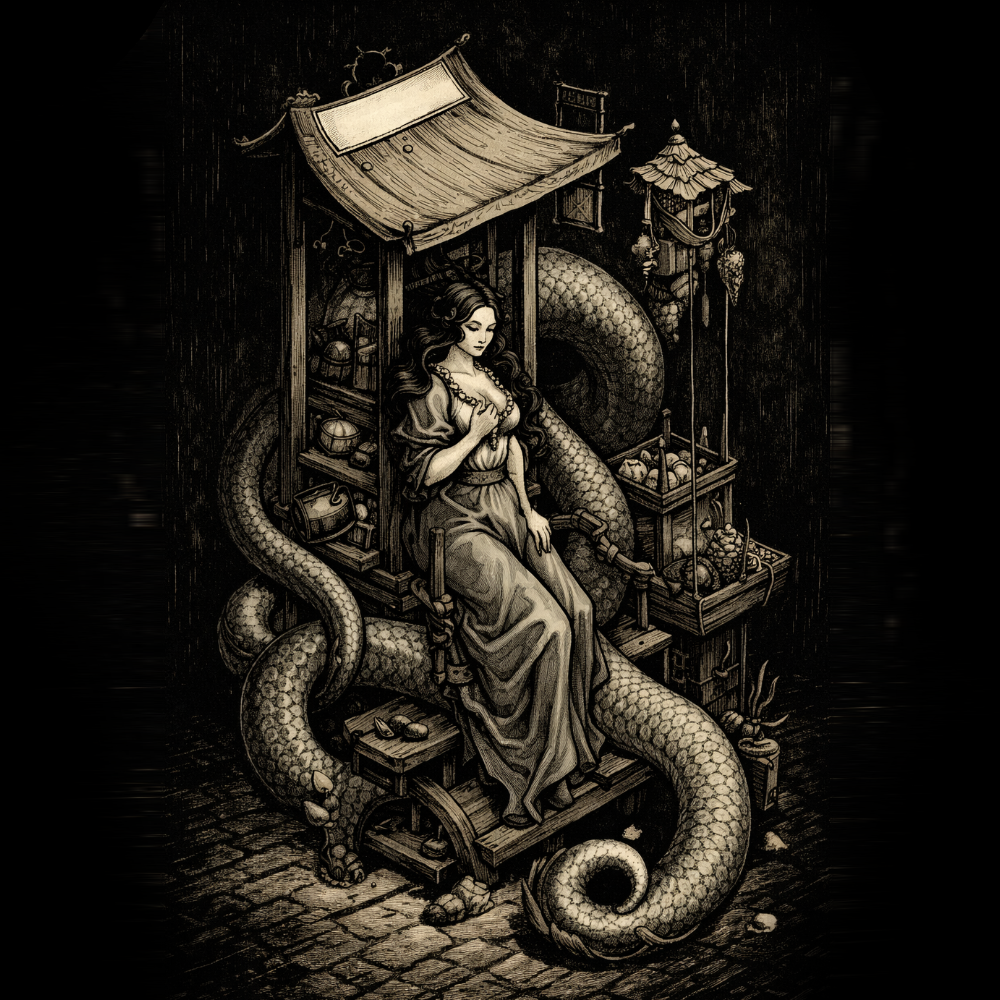
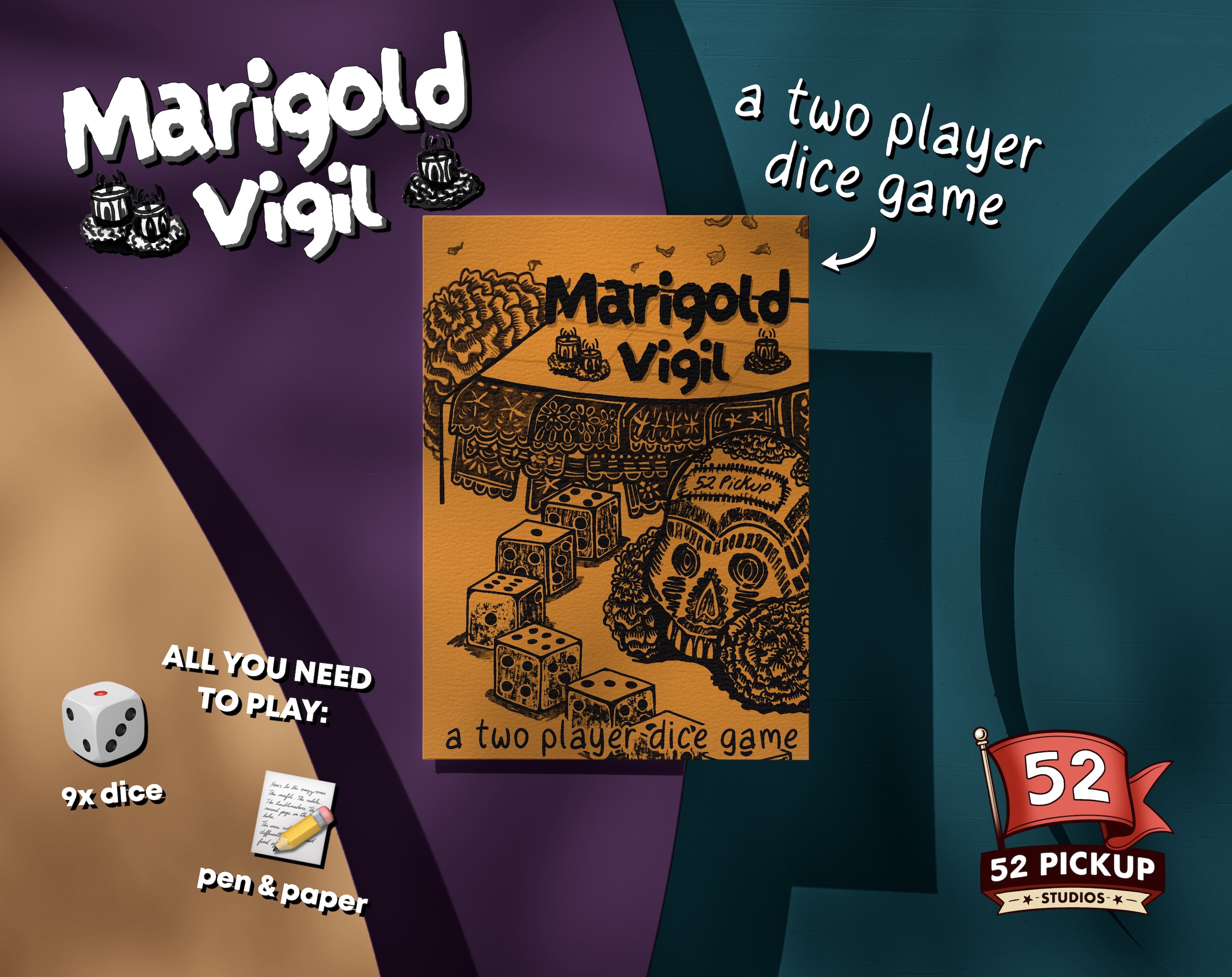
Marigold Vigil: a Two Player Dice Game You are preparing an altar to welcome back someone you both loved and lost. You each knew a different side of them, and your memories don't always match. The food, drinks, and gifts you bring each tell a different story. Tonight is an opportunity to have another evening with them, and you want to have everything ready for their arrival. Marigold Vigil is a strategy game for 2 players that uses 9 six-sided dice, 2 tokens, and pencil and paper. The dice are offerings on the altar, arranged in a 3x3 grid. One player takes Odd numbers and the other player takes Even numbers, taking turns moving around the altar and changing the numbers on the dice. Complete lines of matching numbers to gain Petals and add to your final count. Have the highest count at dawn to win! Marigold Vigil features original art by the talented Brene San Germán ( @brene.art ) Notes from the Designer Marigold Vigil uses the most six-sided dice of any game in the 52 Pickup catalogue (over 43 games at the moment and counting). This got me thinking about some of my favourite dice maths. In the set-up for Marigold Vigil, you need to roll nine six-sided dice until you have either four odd and five even, or five odd and four even. I needed to work out the probability of this because I didn't want my players to have to roll the dice again and again. It turns out the probability of the desired outcome is ~49%, so I'd expect players to roll slightly over twice to get the set-up, which I think is reasonable. There are a few more interesting properties of rolling nine six-sided dice. Firstly, you're guaranteed at least one pair, and 84% of the time there's a three of a kind. This is important for Marigold Vigil, as you're looking to build lines of the same number. It means there's some tension in the set-up: one player is trying to make their line of three of a kind easy to get, while the other is trying to break it up, and vice versa. Some other fun dice facts: the probability of rolling any double on two six-sided dice is the same as rolling any specific number on one six-sided die (for example, the chance of rolling a six). Also, for those who don't know, the opposite faces of a six-sided die always add up to seven. For example, if the face that rolls up is a six, the face on the bottom of the die is a one. This usually holds for other dice as well, with opposite faces adding up to the die's highest number plus one. For example, on an eight-sided die opposite faces add up to nine, and on a 20-sided die they add up to 21.