The Dying Blade
On Quisicosas since 4 February 2026
Featured in the newsletter of
4 February 2026 (on Substack)
What it is about
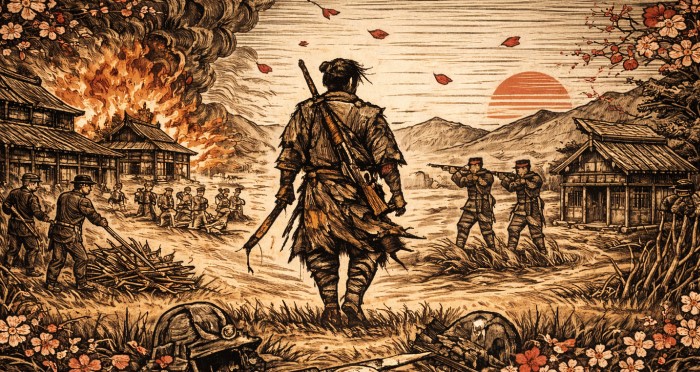
The Dying Blade is a solo journaling RPG set during Japan's Meiji Restoration (1876–1882), when the government banned the sword and systematically dismantled the samurai schools. You play a ronin caught between a dying world and a future that has no place for you. This is not a power fantasy. You are genuinely outmatched. A swordsman against riflemen is not an even fight, and the dice know it. The game uses asymmetric two-phase combat that reflects this reality — you must close distance before you can strike, and every step forward is dangerous. The Two Pressures Your Ronin is trapped between two forces: Honor starts at 6 and erodes. Every compromise, every surrender, every moment the new world forces itself onto you chips away at what you were. When it hits zero, you have lost everything that made you who you are. Modernization starts at 0 and builds. Amnesty offers. Government work. The seduction of survival. When it reaches 6, you have become what you once opposed. Neither ending is failure. Both are tragic. The moral weight lives in the space between them. What Makes This Different Asymmetric Combat. Sword vs. gun is two phases: closing distance (where you're vulnerable) and the blade (where you're deadly). The mechanics enforce the historical reality — you are fighting the wrong century. Six Schools, Six Edicts. Roll your School of Origin (Ittō-ryū, Shimmen-ryū, Hokku-shin, etc.) and the Imperial Edict in your region (conscription, disarmament raids, amnesty offers). The same crisis plays completely differently depending on who you are and what pressure the government is applying. What You Carry. Four spendable boxes representing the things that matter: Honor of the School, A Living Student, The Blade Itself, Memory of What You Were. Each one can be spent once for a mechanical benefit. Each one's loss reshapes who you are. The Blade Track. Your sword is a depletable resource that does not refill. Spend it to force the close, to re-roll failures, to refuse costs. When it's gone, you are disarmed in every sense that matters. Journaling as Core Loop. The dice generate events. The journal is where you find out what they mean. Write in first person. Be specific. Be honest with the character. This is the interior life of a man watching his civilization die. What's Included 33-page complete game 9 generation tables (Situations, Opportunities, Complications, Locations, Encounters, Consequences, Schools, Edicts, and more) Two-phase asymmetric combat system Three interconnected tracks with mid-point triggers Worked sample scenario showing exactly how it plays Campaign tracking sheets for chaining scenarios together Quick reference for at-the-table play Influences Twilight Samurai , The Last Samurai , the Satsuma Rebellion, Blood on the Cobblestones , Wretched & Alone What You Need Two six-sided dice (2d6) Paper and pen for journaling One hour per scenario Content Notes This game deals with the end of an era, the collapse of identity, and the quiet violence of historical progress. It is not about glorifying samurai or demonizing modernization. It is about what it costs to be made obsolete — and whether dignity survives the process.